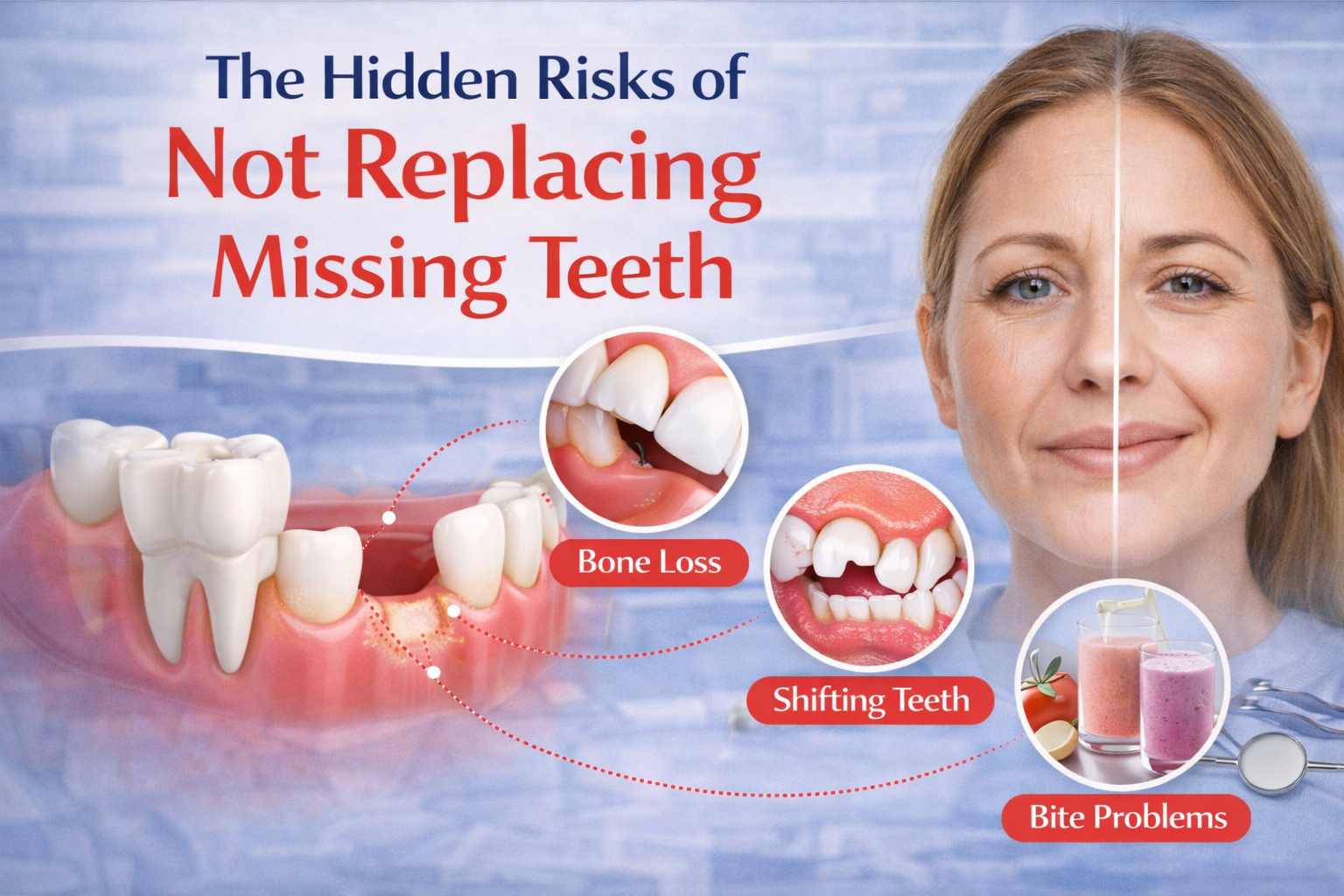
The Hidden Risks of Not Replacing Missing Teeth
Missing teeth are more than just a cosmetic concern. While many people may think a single gap is harmless, failing to replace missing teeth can lead to serious oral and overall health issues. Understanding the risk of missing teeth is crucial to maintaining a healthy mouth and a confident smile.
Understanding the Risk of Missing Teeth
When a tooth is lost, the surrounding teeth, gums, and jawbone are immediately affected. The risk of missing teeth extends beyond aesthetics; it can result in multiple oral complications:
- Bone Loss: Teeth stimulate the jawbone through chewing. Without this stimulation, bone tissue gradually deteriorates, leading to facial changes.
- Shifting Teeth: Adjacent teeth may move into the empty space, causing misalignment and bite problems.
- Gum Disease: Gaps can trap food particles and bacteria, increasing the risk of infections.
- Difficulty Eating: Missing teeth can hinder proper chewing, affecting nutrition and digestion.
- Speech Impairment: Gaps, especially in the front teeth, can alter pronunciation and cause self-consciousness.
A study published in the Journal of Dental Research found that adults with missing teeth are up to 30% more likely to develop periodontal disease compared to those with complete dentition source.
The Long-Term Consequences
Beyond oral health, untreated gaps can impact your overall well-being:
- Jaw Pain and TMJ Disorders: Missing teeth change bite alignment, straining the jaw muscles and joints.
- Accelerated Tooth Wear: Remaining teeth may experience uneven pressure, leading to premature wear or fractures.
- Digestive Issues: Poor chewing reduces nutrient absorption, impacting overall health.
Table: Common Risks of Missing Teeth
Risk Category | Potential Complication | Long-Term Impact |
Bone Health | Jawbone resorption | Facial sagging and bone loss |
Oral Alignment | Shifting or tilting of teeth | Bite misalignment, difficulty chewing |
Gum Health | Increased plaque accumulation | Gum disease, infections |
Speech & Confidence | Slurred speech, self-consciousness | Social and professional impact |
Overall Health | Poor digestion, nutritional loss | Compromised systemic health |
Treatment Options for Missing Teeth
Fortunately, modern dentistry provides effective solutions for replacing missing teeth. Options include dental implants, bridges, and dentures. Seeking timely missing teeth treatment can prevent complications and restore oral function and aesthetics.
Dental implants, in particular, are highly recommended because they:
- Mimic natural teeth both in appearance and function.
- Preserve jawbone density.
- Provide long-lasting durability when maintained properly.
Bridges are an alternative for patients who want a non-surgical option, while removable dentures can be suitable for multiple missing teeth. Discussing your individual needs with a qualified dentist ensures the best outcome.
The Psychological Impact
Missing teeth can affect self-esteem and social interactions. According to a survey by the American Academy of Cosmetic Dentistry, 74% of adults feel self-conscious about missing teeth source. This highlights the importance of replacing teeth not only for health but also for emotional well-being.
Key Takeaways
- The risk of missing teeth goes beyond aesthetics, affecting bone health, oral function, and overall wellness.
- Early intervention prevents long-term complications like gum disease, jaw misalignment, and digestive issues.
- Dental implants, bridges, and dentures are effective solutions; consulting a dentist ensures the right treatment.
- Maintaining oral hygiene and regular dental visits are essential even after tooth replacement.
“An ounce of prevention is worth a pound of cure.” – Benjamin Franklin
By understanding the hidden consequences, you can make informed decisions about dental care and avoid the pitfalls of leaving gaps untreated.
FAQs
What are the risks of missing teeth if left untreated?
Untreated gaps can lead to bone loss, gum disease, shifting teeth, bite misalignment, difficulty chewing, and speech problems.
How can missing teeth affect overall health?
Missing teeth can cause digestive issues, jaw pain, and even impact nutrition due to improper chewing. Maintaining oral health is linked to better systemic health.
What is the best treatment for missing teeth?
Dental implants are often the best option for durability and bone preservation. Bridges and dentures are alternatives depending on the number of missing teeth and patient preference.
How soon should I replace a missing tooth?
It’s recommended to consult a dentist as soon as possible after tooth loss to prevent bone deterioration, shifting teeth, and other complications.
Can missing teeth impact self-confidence?
Yes, missing teeth can lead to embarrassment, reluctance to smile, and social anxiety. Restoring teeth can significantly improve confidence and quality of life.