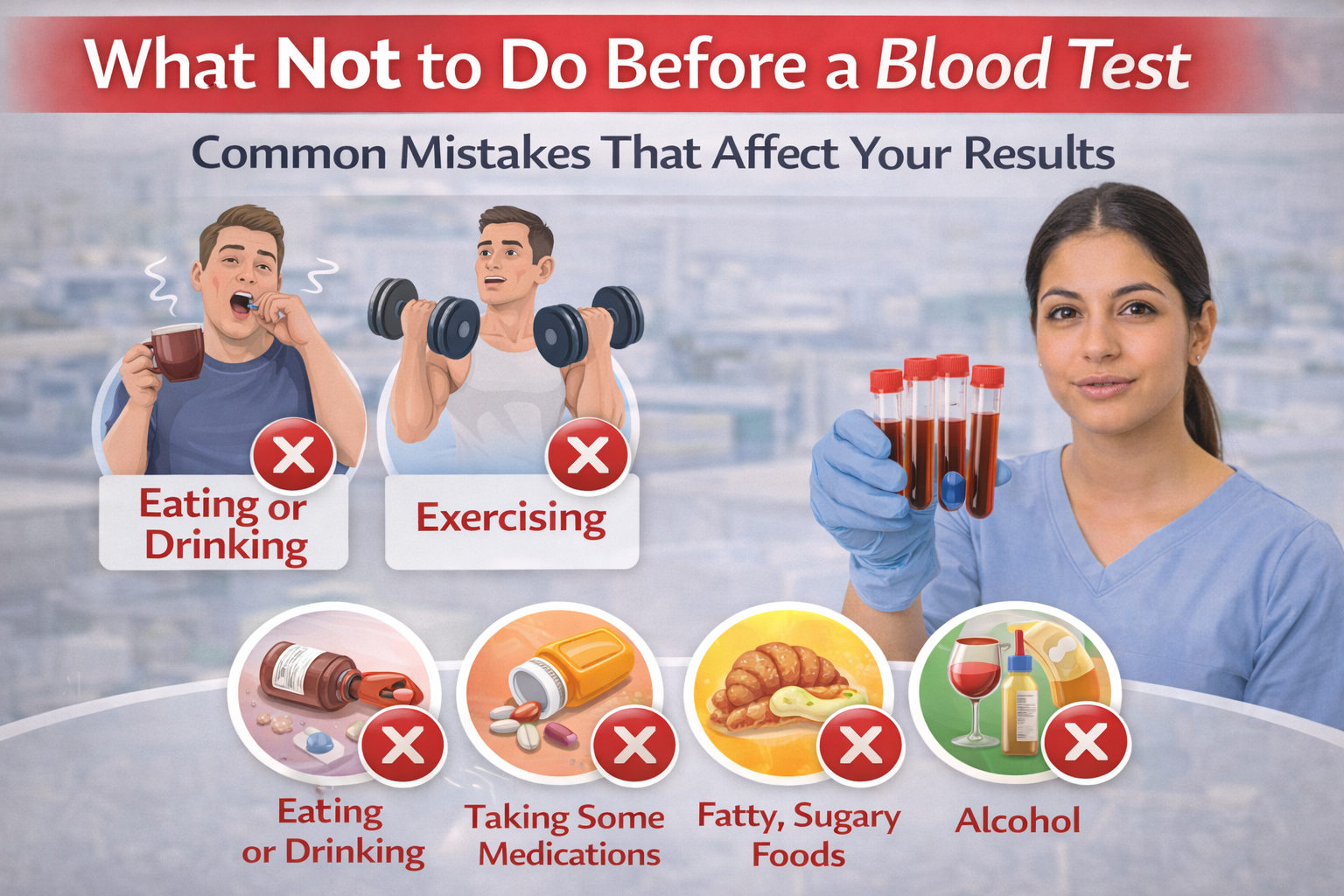
What Not to Do Before a Blood Test: Common Mistakes That Affect Your Results
Getting a blood test is a routine yet crucial part of diagnosing and monitoring many health conditions. However, many patients unknowingly make simple mistakes before the test that can skew their results. Understanding what not to do before a blood test can help ensure your report accurately reflects your health.
From food choices to physical activity, even minor behaviors can impact everything from cholesterol to glucose levels. Whether you’re preparing for a general health screening or specific diagnostic testing in Ajman, Dubai, or anywhere in the UAE, this guide will walk you through the most common pre-test pitfalls to avoid.
Why Pre-Test Preparation Matters
Blood tests offer critical insights into your body’s functioning — such as kidney, liver, heart, and immune system health. However, certain habits and actions before testing can influence biomarkers like:
- Blood glucose
- Lipid panels (cholesterol and triglycerides)
- Liver enzymes
- Electrolytes
- Hormone levels
According to the Cleveland Clinic, preparation can mean the difference between normal and abnormal results.
Top 8 Common Mistakes: What Not to Do Before a Blood Test
1. Eating Before a Fasting Blood Test
Some tests require 8–12 hours of fasting. Eating or drinking anything other than water can increase:
Test Type | Impact of Eating |
Blood Glucose | Elevated sugar levels |
Lipid Panel | False high cholesterol |
Insulin Test | Altered insulin response |
Tip: Confirm with your clinic whether fasting is necessary. If unsure, call ahead.
2. Drinking Coffee or Tea
Even black coffee can stimulate digestion and affect insulin and glucose levels. Herbal teas may also interfere with kidney and liver biomarkers.
“Caffeine can affect hydration and blood sugar — even without added sugar or milk.” — Healthline
3. Not Drinking Enough Water
Dehydration can cause blood to thicken, making the blood draw more difficult and skewing electrolyte readings.
Hydration tip: Drink 1–2 glasses of water one hour before your appointment unless instructed otherwise.
4. Over-Exercising Before the Test
Exercise may temporarily elevate enzymes, hormones, and white blood cell count. Avoid intense workouts at least 24 hours prior to bloodwork.
Especially avoid before:
- Creatine kinase (CK) tests
- Cortisol tests
- Liver function tests
5. Taking Supplements or Medications
Vitamins like biotin (B7), high-dose vitamin D, or iron can interfere with thyroid, liver, or hormone tests.
Always inform your doctor about all the supplements and medications you’re taking. Some may advise a 24-48 hour pause before testing.
6. Smoking or Vaping
Nicotine and tobacco use can affect white blood cell count and cortisol levels. Avoid smoking for at least 1-2 hours before the test, or as advised by your physician.
7. Consuming Alcohol
Alcohol can interfere with liver function tests, triglycerides, and blood sugar levels. It’s best to avoid alcohol for at least 24 hours before your test.
8. Stress and Poor Sleep
Stress can increase cortisol, blood pressure, and blood glucose levels. Inadequate sleep may also trigger inflammatory markers.
Bonus Tip: Clarify Your Test Type
Not all blood tests require fasting or changes in routine. Here’s a quick table of test types and common preparation instructions:
Test Category | Fasting Needed? | Prep Notes |
Lipid Profile | Yes (8–12 hrs) | No caffeine, alcohol, or exercise |
Complete Blood Count | No | Stay hydrated |
Thyroid Panel | No (usually) | Avoid biotin before the test |
Blood Glucose (FBS) | Yes (8–12 hrs) | Avoid food, only drink water |
Liver Function | No | Avoid alcohol & fatty foods |
Key Takeaways
- Avoid eating or drinking anything but water if fasting is required.
- Don’t consume caffeine, alcohol, or nicotine beforehand.
- Inform your lab about all medications and supplements.
- Stay well-hydrated and well-rested for best results.
- Exercise and stress should be managed before testing.
Making these small adjustments ensures more reliable lab results and accurate medical evaluations.
FAQs
1. Can I brush my teeth before a fasting blood test?
Yes, brushing your teeth is allowed. Just avoid swallowing toothpaste or mouthwash.
2. Does drinking water affect fasting test results?
No. Water is encouraged before most blood tests and helps keep you hydrated for easier blood draw.
3. Can I take my regular morning medication before a blood test?
Always ask your doctor. Some medications, like thyroid or cholesterol drugs, may affect test accuracy.
4. Can stress really affect my blood test results?
Yes. Stress can increase cortisol and glucose levels. Try relaxation techniques before your appointment.
5. What happens if I accidentally ate before a fasting test?
Let your healthcare provider know. They may reschedule or interpret the results accordingly.
If you’re unsure about preparation for your upcoming blood test, consult with your healthcare provider or call your diagnostic center in advance.For those needing urgent testing, Amtek Medical offers same-day blood test results in Ajman perfect for time-sensitive health assessments. Just make sure you follow these pre-test steps for best outcomes.