What Is a Deep Bite? Understanding Causes, Symptoms, and Treatments
A deep bite is a common dental issue that can affect your bite alignment, potentially leading to discomfort, tooth wear, and even jaw pain. This condition is classified as a type of malocclusion, which refers to misalignment of the teeth. In this blog, we’ll delve into what a deep bite is, the causes behind it, the symptoms to look out for, and the available treatments to restore your smile and function. Whether you live in Ajman or Dubai, understanding the importance of early intervention and proper treatment is crucial for maintaining your dental health.
What Is a Deep Bite?
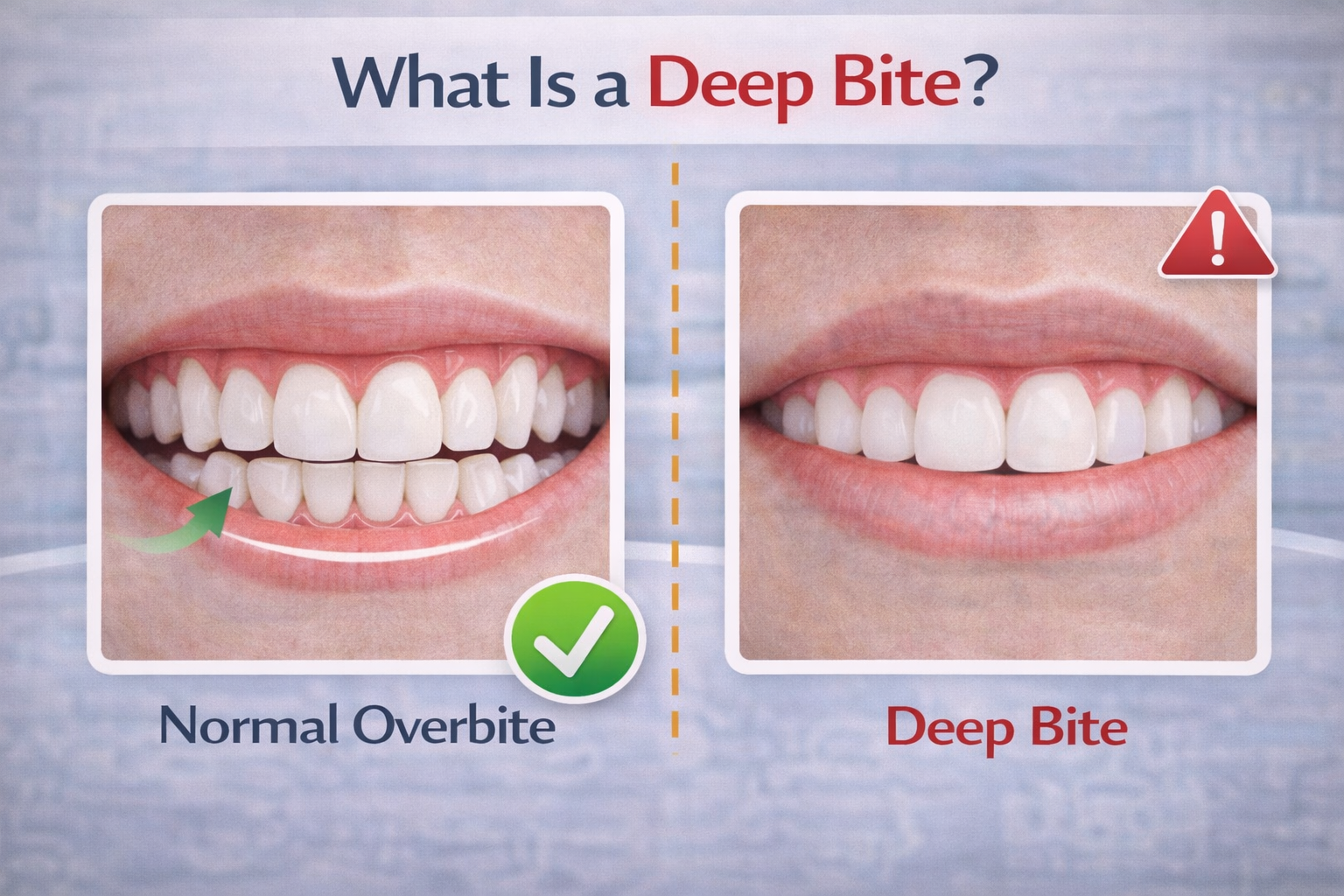
A deep bite occurs when the upper front teeth overlap excessively over the lower front teeth when biting down. This is more than just a cosmetic concern. A deep bite can affect the way your teeth come together, leading to improper pressure on the teeth and jaw. If left untreated, it may cause damage to your teeth and jaw over time.
In a typical bite, the upper teeth slightly overlap the lower teeth, allowing for proper chewing and speaking. However, in individuals with a deep bite, the overlap is much more pronounced, which can lead to several issues:
Tooth damage: Constant pressure on the teeth can cause them to wear down prematurely.
Jaw pain or discomfort: Misalignment of the teeth can place extra stress on the jaw joints, leading to pain.
Speech issues: A deep bite may affect pronunciation and speech clarity.
Cosmetic concerns: The appearance of the teeth and smile may be impacted, leading to self-esteem issues.
Causes of a Deep Bite
There are several factors that can contribute to the development of a deep bite:
1. Genetics
In many cases, a deep bite is hereditary. If one or both parents had a similar condition, their children may be more likely to develop a deep bite as well.
2. Thumb Sucking or Pacifier Use
Prolonged thumb sucking or the use of a pacifier during childhood can contribute to a deep bite. These habits can affect the alignment of the teeth and jaw.
3. Jaw Discrepancies
In some cases, a deep bite may result from discrepancies in jaw growth. If the upper jaw grows too far forward, it can cause the upper teeth to overlap the lower teeth.
4. Missing Teeth
The loss of teeth, particularly in the back of the mouth, can alter the alignment of the remaining teeth, causing a deep bite.
5. Poor Oral Habits
Habits like mouth breathing can also play a role in developing a deep bite by affecting the position of the tongue and the way the teeth align.
Symptoms of a Deep Bite
If you suspect you may have a deep bite, watch for the following symptoms:
Teeth overlapping excessively: The upper front teeth cover a significant portion of the lower front teeth when biting down.
Worn-down teeth: Individuals with a deep bite may notice excessive wear on their front teeth or difficulty chewing.
Jaw pain: Misalignment can place undue pressure on the jaw, leading to discomfort, particularly when chewing or speaking.
Headaches: Chronic misalignment can trigger headaches or migraines, especially if the jaw joints are affected.
Speech issues: If your bite is misaligned, you may find it difficult to speak clearly or properly enunciate certain words.
How Is a Deep Bite Diagnosed?
Diagnosing a deep bite involves a comprehensive examination by a dentist or orthodontist. Your dentist will visually inspect your teeth and take X-rays to assess the alignment of your bite and the structure of your teeth and jaw. In some cases, dental impressions may also be taken to create a 3D model of your teeth to help with diagnosis.
If you suspect you may have a deep bite, it’s essential to consult a dental professional in Ajman or Dubai who can evaluate the severity of your condition and recommend the appropriate treatment.
Treatment Options for a Deep Bite
The treatment for a deep bite varies depending on the severity of the condition and the patient’s age. Below are some of the most common treatment options:
1. Braces Installation
One of the most effective treatments for correcting a deep bite is the use of braces installation. Braces work by gradually shifting the teeth into their correct positions over time. The process involves the application of brackets and wires to realign the teeth and improve the bite. In cases where the deep bite is caused by jaw discrepancies, braces may be used in combination with other treatments, such as jaw surgery.
Learn more about braces installation in Ajman
2. Clear Aligners
Clear aligners, such as Invisalign, offer a discreet alternative to traditional braces. These clear, removable trays are custom-made to fit your teeth and gradually shift them into place. Clear aligners are especially popular among adults and teenagers who are looking for a less noticeable option.
3. Jaw Surgery
For severe cases of a deep bite, particularly those caused by significant jaw discrepancies, surgery may be required. This option is usually considered when orthodontic treatments alone cannot correct the misalignment. Jaw surgery is typically followed by braces or other orthodontic treatments to achieve the final results.
4. Retainers
Once the deep bite is corrected with braces or clear aligners, a retainer is often worn to maintain the new alignment. Retainers are custom-designed to fit your teeth and prevent them from shifting back to their original position.
5. Tooth Extraction
In some cases, tooth extraction may be necessary to provide space for proper alignment. This option is typically considered when the deep bite is caused by overcrowding or when the teeth are positioned in a way that prevents proper alignment.
Common Treatment Options for Deep Bite
Treatment Option | Description | Ideal For |
Braces Installation | Metal brackets and wires gradually shift teeth. | All ages, especially teens |
Clear Aligners | Removable, transparent trays for teeth alignment. | Adults and image-conscious teens |
Jaw Surgery | Surgical realignment of the jaw. | Severe cases of deep bite |
Retainers | Custom-fit devices worn post-treatment. | Maintaining results after braces |
Tooth Extraction | Removal of teeth to create space for alignment. | Overcrowding or misalignment |
Key Takeaways
A deep bite is a dental condition where the upper teeth overlap the lower teeth excessively.
Common causes include genetics, poor oral habits, jaw discrepancies, and missing teeth.
Treatment options vary depending on the severity of the condition and may include braces installation, clear aligners, jaw surgery, retainers, or tooth extraction.
It’s important to consult with a dentist or orthodontist for proper diagnosis and treatment planning.
FAQs
1. What are the main causes of a deep bite?
The main causes of a deep bite include genetics, thumb sucking, prolonged pacifier use, jaw discrepancies, and missing teeth.
2. Can a deep bite be corrected with braces?
Yes, braces installation is one of the most effective ways to correct a deep bite. It gradually shifts the teeth into proper alignment.
3. How do I know if I have a deep bite?
Symptoms of a deep bite include excessive overlap of the upper and lower front teeth, worn-down teeth, jaw pain, and speech issues. A dental exam can confirm the diagnosis.
4. How long does it take to fix a deep bite with braces?
The duration of treatment with braces can vary, but it typically takes between 18 months to 2 years, depending on the severity of the deep bite.
5. Is jaw surgery necessary for a deep bite?
Jaw surgery is generally only recommended for severe cases of a deep bite where other orthodontic treatments have been ineffective.