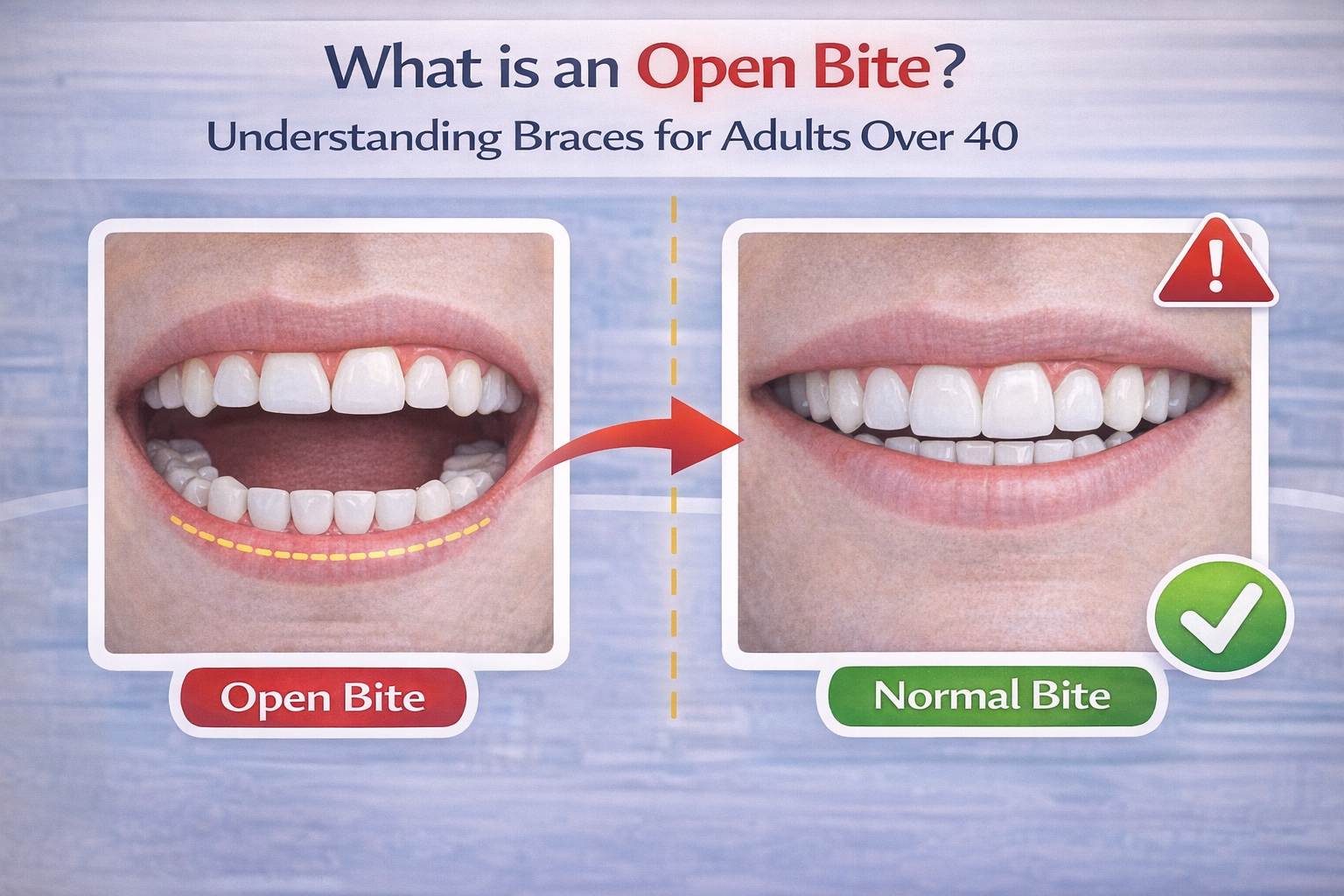
What is an Open Bite? Understanding This Common Dental Condition
If you’ve ever noticed that your teeth don’t align properly when your mouth is closed, you may be experiencing a condition known as an open bite. An open bite is a type of malocclusion where the upper and lower teeth don’t meet when the jaws are closed, leaving a noticeable gap. This dental condition can cause discomfort, affect speech, and lead to difficulty eating. So, what is an open bite, and how can you address it?
In this blog, we will explore everything you need to know about open bite, its causes, symptoms, and treatment options, especially focusing on orthodontic treatments. If you’re located in Ajman, Dubai, or anywhere in the UAE, this guide will help you better understand your options for treatment.
What is an Open Bite?
An open bite is a dental condition where the upper and lower teeth do not align when the mouth is closed. This results in a gap between the teeth, causing a variety of issues for the patient. While open bite can affect both the front and back teeth, it is most commonly noticed at the front of the mouth, where the upper and lower incisors don’t meet.
This condition can be classified into two main types: anterior open bite and posterior open bite.
Types of Open Bite
- Anterior Open Bite: This is the most common form of open bite, where the upper and lower front teeth do not meet, leaving a gap.
- Posterior Open Bite: This occurs when the back teeth do not come together, leading to a similar gap in the back of the mouth.
Open bite can be caused by several factors, such as genetics, prolonged thumb sucking, or abnormal tongue posture.
Causes of Open Bite
Several factors can contribute to the development of an open bite, including:
- Genetic Factors: A family history of malocclusion or other dental issues can increase the likelihood of developing an open bite.
- Thumb Sucking or Pacifier Use: Prolonged thumb sucking during childhood can put pressure on the teeth and jaw, leading to an open bite.
- Tongue Thrusting: A condition where the tongue pushes against the teeth when swallowing or speaking can cause an open bite.
- Jaw Abnormalities: Certain jaw or bone development issues can lead to misalignment between the upper and lower teeth.
- Other Habits: Habits like mouth breathing or biting the nails can also contribute to open bite formation.
Symptoms of Open Bite
An open bite can cause a range of symptoms, including:
- Visible Gaps in the Teeth: One of the most noticeable signs of an open bite is a gap between the upper and lower teeth when the mouth is closed.
- Difficulty Chewing or Biting Food: The lack of proper teeth alignment can make it difficult to bite or chew certain foods.
- Speech Issues: An open bite can affect speech patterns, especially in children, as it may cause problems with pronouncing certain sounds.
- Jaw Pain or Discomfort: Some individuals with an open bite may experience jaw discomfort, especially when chewing.
How is Open Bite Diagnosed?
A dentist or orthodontist will conduct a thorough examination of your teeth, jaws, and bite alignment to diagnose an open bite. X-rays may be taken to assess the position of the teeth and jaw bones. A detailed medical history and discussion of any habits that could be contributing to the condition, such as thumb sucking or tongue thrusting, will also be important for diagnosis.
Treatment for Open Bite
The treatment for an open bite will depend on the severity of the condition and the age of the patient. The primary goal of treatment is to correct the bite and ensure that the upper and lower teeth meet properly. Several treatment options are available, ranging from non-invasive methods to more advanced orthodontic procedures.
1. Braces and Retainers
In most cases, orthodontic treatments like braces can help shift the teeth into proper alignment, closing the gap caused by the open bite. This is especially effective for younger patients whose bones are still developing.
2. Clear Aligners
Clear aligners, such as Invisalign, are a discreet option for treating open bite, especially for those who are concerned about the appearance of traditional braces.
3. Surgical Treatment
In cases where the open bite is caused by severe jaw misalignment, surgical intervention may be necessary to reposition the jawbones and achieve proper alignment.
4. Tongue-Tie Release or Myofunctional Therapy
For patients whose open bite is caused by tongue thrusting or improper tongue posture, therapy may be used to train the tongue to rest in a more natural position.
For those in the UAE, especially in Ajman and Dubai, seeking orthodontic treatments, there are various clinics offering advanced solutions like braces, aligners, and other services tailored to your needs. One of the leading clinics for orthodontic treatments in Ajman is Amtek Medical. You can learn more about available options here.
The Role of Orthodontic Treatments in Open Bite Correction
Orthodontic treatments are essential in correcting open bite and ensuring the proper alignment of the teeth. Braces, clear aligners, and retainers are some of the most common orthodontic tools used to fix open bite. These treatments not only address the visible gap but also work to improve overall dental function.
While braces are effective for younger patients, clear aligners are becoming a popular choice for adults due to their discretion and ease of use. Regardless of the method chosen, seeking orthodontic care is essential to correct an open bite.
Types of Treatment Options for Open Bite
|
Treatment Type
|
Description
|
Ideal Candidate
|
Duration
|
|
Braces
|
Metal or ceramic brackets attached to the teeth to gradually shift them.
|
Children, teens, adults
|
1-2 years
|
|
Clear Aligners
|
Custom-made, transparent trays that align teeth over time.
|
Adults, older teens
|
6 months – 2 years
|
|
Surgical Treatment
|
Corrects severe jaw misalignment by repositioning the jawbones.
|
Severe open bite cases
|
3-6 months
|
|
Myofunctional Therapy
|
Exercises and therapies that retrain tongue posture and swallowing.
|
Children with tongue thrusting
|
6-12 months
|
Key Takeaways
- What is an open bite? It’s a dental condition where the upper and lower teeth don’t align when the mouth is closed, creating gaps that can lead to discomfort and speech issues.
- The condition can be caused by genetic factors, thumb sucking, tongue thrusting, or jaw abnormalities.
- Treatment options include braces, clear aligners, and in severe cases, surgery. Early intervention provides the best results.
- Proper orthodontic treatments are crucial for correcting the open bite and restoring the proper function and alignment of teeth.
FAQs
1. Can an open bite be fixed without surgery?
Yes, most open bites can be corrected with orthodontic treatments like braces or clear aligners. Surgery is only needed for severe cases.
2. Is there a specific age to get orthodontic treatment for open bite?
Orthodontic treatments can be effective at any age, though younger patients tend to have better results due to more flexible bones. Adults can also benefit from treatments like clear aligners.
3. How long does it take to correct an open bite with braces?
The duration depends on the severity of the open bite, but treatment typically lasts between 12 to 24 months.
4. Can tongue thrusting cause an open bite?
Yes, tongue thrusting is a common cause of open bite, especially in children. Myofunctional therapy can help correct this habit.
5. How much do orthodontic treatments for open bite cost?
Costs vary depending on the type of treatment and location, but braces typically range from AED 6,000 to AED 12,000 in the UAE. It’s best to consult with a dental professional for an accurate estimate.