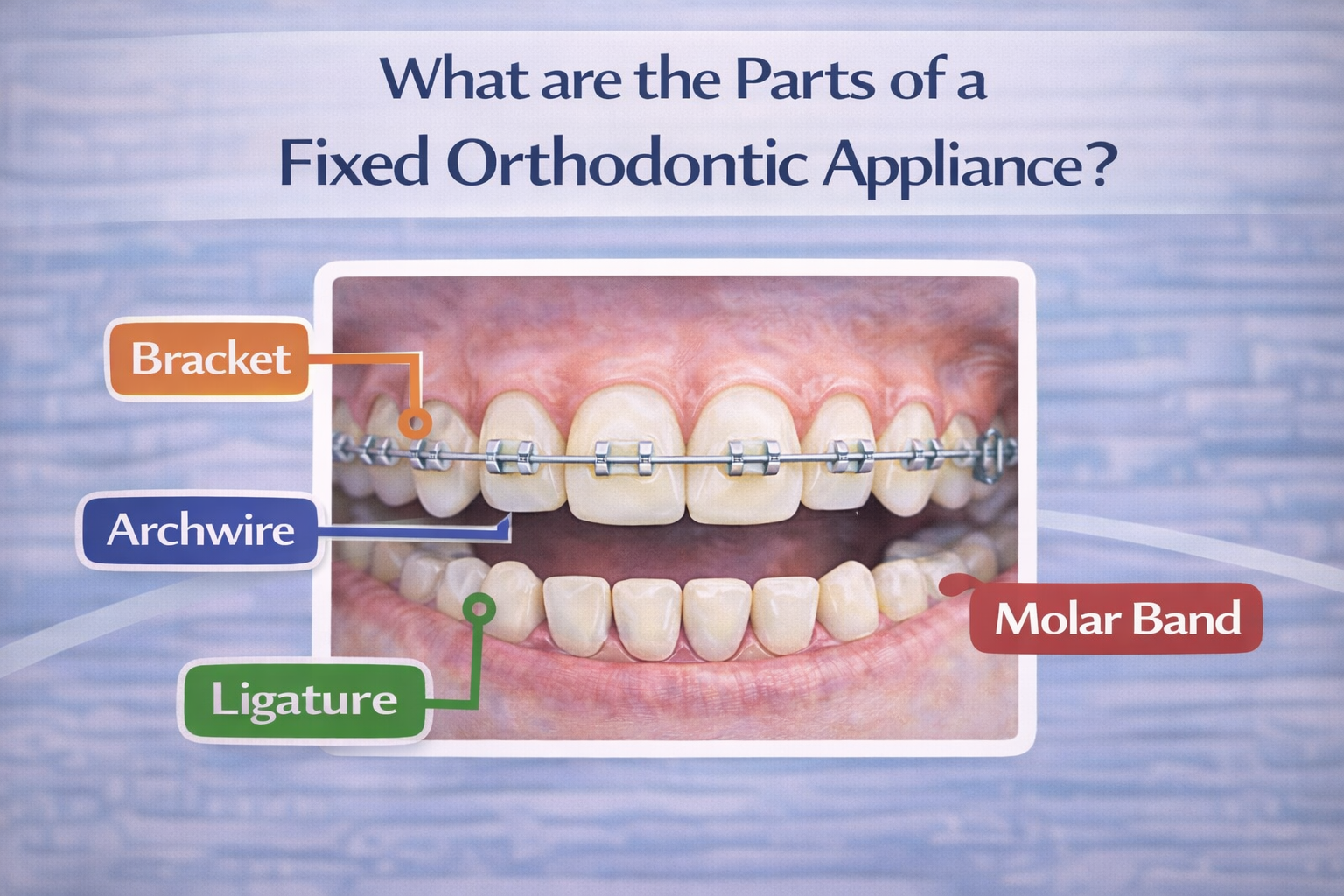
What are the Parts of a Fixed Orthodontic Appliance?
Fixed orthodontic appliances are an essential component of modern orthodontic treatments, designed to correct teeth and jaw misalignments. Understanding the parts of fixed orthodontic appliance is crucial for anyone considering orthodontic treatment. These appliances are effective in guiding teeth into their correct position over time, providing long-lasting and healthy results.
In this article, we will dive into the specific components of a fixed orthodontic appliance, their function, and how they work together to deliver the best orthodontic outcomes. Whether you’re in Ajman, Dubai, or elsewhere in the UAE, understanding these components can help you make informed decisions about your treatment options.
What is a Fixed Orthodontic Appliance?
Before diving into the specific parts of a fixed orthodontic appliance, it’s important to understand what a fixed appliance is. A fixed orthodontic appliance is a dental device that is securely attached to the teeth, making it different from removable appliances like retainers. It is commonly used to treat a variety of dental issues, including crooked teeth, misaligned jaws, and bite problems.
Key Components of Fixed Orthodontic Appliance
A fixed orthodontic appliance consists of various parts that work together to move teeth into their ideal positions. Let’s break down the different components:
- Brackets
- Brackets are small metal or ceramic pieces that are attached to each tooth. They are the core of the fixed orthodontic appliance. Brackets are placed on the front surface of each tooth, and they serve as anchors for the entire system.
- The brackets hold the archwire in place, which is the next crucial component in the appliance.
- Archwire
- The archwire is a thin, flexible wire that runs across the brackets. It connects all the brackets together and applies gentle pressure to guide the teeth into the desired positions.
- The wire is usually made of stainless steel, nickel-titanium, or other alloys, depending on the type of treatment required.
- Elastic Ligatures (O-Rings)
- Elastic ligatures, also known as O-rings, are small rubber bands that hold the archwire to the brackets. They come in different colors, adding a fun aspect to the appliance.
- These ligatures also contribute to the overall force exerted on the teeth by holding the archwire in place and helping with tooth movement.
- Bands
- Bands are metal rings that are placed around the molars to secure the brackets. These are typically placed on the back teeth, where additional pressure is required for alignment.
- Bands are often used when a greater level of force is needed to correct significant dental misalignments or bite issues.
- Spacers
- Spacers, also called separators, are small rubber or metal objects used to create space between the molars before placing bands. These are typically used in the early stages of orthodontic treatment.
- Spacers help create the necessary gap for the bands to fit properly.
- Hooks
- Some fixed appliances have small hooks attached to the brackets. These hooks allow additional components, such as elastic bands or headgear, to be attached to the appliance.
- These hooks can help improve the movement of the teeth by applying extra forces where needed.
- Archwire Ties
- These are small wires or ties that secure the archwire to the brackets. They are essential in keeping the archwire in place as it applies pressure to the teeth.
- Archwire ties come in different materials and can either be metal or elastic.
- Headgear (Optional)
- While not a mandatory part of all fixed appliances, headgear can be an additional component for treating more severe orthodontic issues.
- Headgear is typically worn outside the mouth and attaches to the braces via hooks or straps. It applies a force to the teeth and jaw to encourage alignment.
How Do the Parts of Fixed Orthodontic Appliance Work Together?
The parts of fixed orthodontic appliance work in unison to move the teeth into their correct alignment. The brackets are attached to each tooth, while the archwire is threaded through the brackets. This combination creates a uniform pressure that slowly shifts the teeth.
Elastic ligatures hold the archwire in place, while bands around the molars ensure that the back teeth are securely anchored. Spacers are used in the early stages to create room for bands, and hooks enable additional appliances to be used when necessary.
As pressure is applied gradually over time, the teeth move in the desired direction, and the result is improved alignment and bite function. Each part of the fixed orthodontic appliance plays a crucial role in achieving this outcome.
Orthodontic Treatments in Ajman, Dubai, and UAE
Fixed orthodontic appliances are a common part of orthodontic treatments available in Ajman and Dubai. Whether you’re looking for braces, Invisalign, or other solutions, orthodontic treatments can help you achieve a beautiful, functional smile. Learn more about orthodontic treatments here.
Key Takeaways
- Fixed orthodontic appliances consist of several key parts, including brackets, archwires, bands, ligatures, and hooks, each playing a crucial role in aligning teeth and correcting bite issues.
- The treatment duration varies depending on the severity of the misalignment and the type of appliance used, but results can be long-lasting and significantly improve dental health.
- Regular follow-ups with your orthodontist ensure that the fixed appliance functions as intended, and adjustments are made to optimize results.
“Orthodontics is not just about making your smile look better; it’s about improving the overall health and functionality of your teeth.” – American Association of Orthodontists
FAQs
1. What is the purpose of brackets in fixed orthodontic appliances?
Brackets are the key components that attach to each tooth and hold the archwire in place. They help guide the teeth into their correct position by exerting gentle pressure.
2. How long do I need to wear a fixed orthodontic appliance?
The duration of wearing a fixed orthodontic appliance varies depending on the complexity of your dental issues. Typically, it can range from 12 to 36 months.
3. Are there any alternatives to fixed appliances?
Yes, alternatives like clear aligners (e.g., Invisalign) and removable appliances may be suitable for certain cases, but they are not as effective for complex misalignments.
4. Do fixed orthodontic appliances hurt?
While you may experience some discomfort when the braces are first applied or adjusted, the pain is usually mild and temporary. Over-the-counter pain relievers can help manage this.
5. Can I eat normally with a fixed appliance?
You can eat most foods, but it is important to avoid hard, sticky, or chewy foods that can damage the appliance. It’s also essential to brush your teeth after every meal.