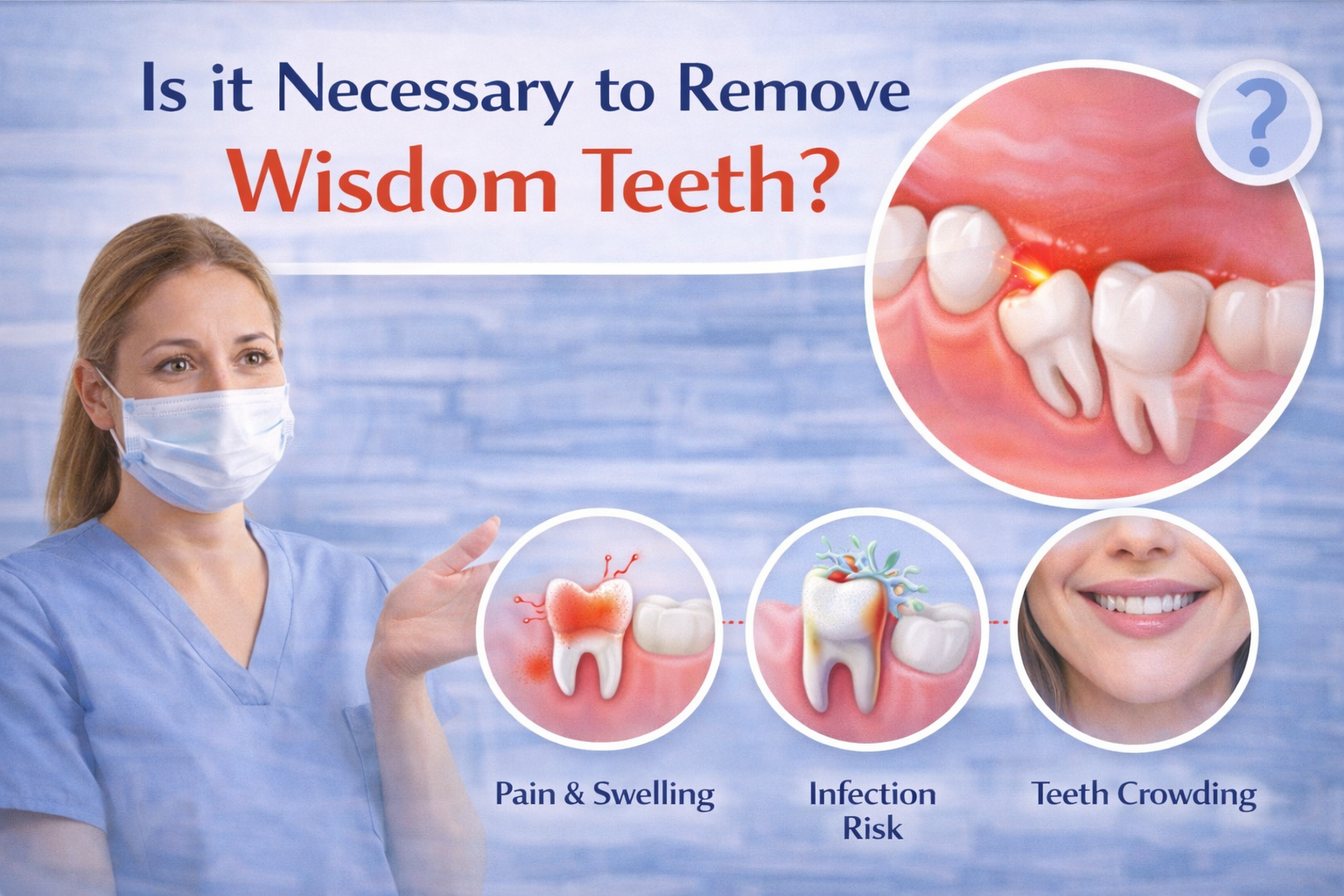
Is it Necessary to Remove Wisdom Teeth?
Wisdom teeth, also known as third molars, are the last set of molars that typically emerge between the ages of 17 and 25. While some people have no issues with their wisdom teeth, others may experience significant dental problems. This raises a common question: is it necessary to remove wisdom teeth? Understanding the potential risks, benefits, and considerations surrounding wisdom teeth extraction can help patients make informed decisions about their oral health.
What Are Wisdom Teeth?
Wisdom teeth are the third set of molars located at the back of the mouth. Most adults have four wisdom teeth, although some may have fewer or even none. Unlike other teeth that emerge in childhood, wisdom teeth appear in late adolescence or early adulthood.
For many individuals, wisdom teeth emerge without causing discomfort. However, in some cases, they may grow in misaligned or partially impacted, leading to oral health issues.
Types of Wisdom Teeth Impaction
Impaction occurs when a wisdom tooth fails to fully emerge or aligns incorrectly. Common types include:
Type of Impaction | Description |
Vertical | Tooth emerges upright but may not fully break through the gum. |
Horizontal | Tooth grows sideways, pushing against the adjacent molar. |
Angular | Tooth tilts at an angle toward or away from the second molar. |
Partial | Only a portion of the tooth breaks through the gum, making it prone to infection. |
Impacted wisdom teeth can create several problems, ranging from minor discomfort to serious infections and dental misalignment.
Signs You Might Need Wisdom Teeth Removal
Not every individual needs to have their wisdom teeth removed. However, certain symptoms may indicate the necessity for extraction:
- Persistent pain or swelling in the back of the jaw
- Recurrent gum infections or inflammation near the wisdom tooth
- Crowding of existing teeth
- Difficulty opening the mouth or chewing
- Formation of cysts or damage to neighboring teeth
Dental professionals often evaluate these symptoms through clinical examinations and X-rays to determine whether extraction is recommended.
Health Risks of Keeping Problematic Wisdom Teeth
Keeping problematic wisdom teeth can lead to several complications:
- Infections: Partially erupted wisdom teeth can trap food and bacteria, leading to gum infections called pericoronitis.
- Tooth Decay: Wisdom teeth are difficult to clean properly, increasing the risk of cavities.
- Cysts and Tumors: Impacted teeth can develop cysts, potentially damaging adjacent teeth and jawbone.
- Alignment Issues: Pressure from emerging wisdom teeth can cause shifting and misalignment of other teeth.
- Pain and Discomfort: Persistent pain in the jaw or headaches may result from impacted wisdom teeth.
A 2018 study published in the Journal of Oral and Maxillofacial Surgery found that approximately 65% of patients with impacted wisdom teeth developed some form of infection or dental complication within five years. (Source)
When Is It Not Necessary to Remove Wisdom Teeth?
Interestingly, not all wisdom teeth require removal. Some may remain fully erupted, healthy, and properly aligned throughout a person’s life. In such cases, extraction might be unnecessary. Dentists usually recommend monitoring these teeth through periodic checkups and X-rays to prevent future issues.
The decision depends on several factors:
- Position of the tooth
- Risk of future complications
- Overall oral health
- Patient age and medical history
The Procedure: What to Expect During Wisdom Tooth Extraction
When a dentist or oral surgeon determines that extraction is necessary, the procedure is typically straightforward. Here’s what patients can expect:
Pre-Procedure Preparation
- Comprehensive dental examination and X-rays
- Discussion of anesthesia options (local, sedation, or general)
- Instructions regarding fasting or medications prior to the procedure
The Extraction Process
- Local anesthesia is administered to numb the area
- The dentist makes an incision in the gum tissue if needed
- The tooth is removed carefully, sometimes in sections for easier extraction
- Stitches may be applied to promote healing
Post-Procedure Care
- Pain management with prescribed medications
- Application of ice packs to reduce swelling
- Maintaining oral hygiene with gentle rinses and soft foods
- Avoiding strenuous activity for several days
For patients seeking professional care, wisdom tooth extraction at Amtek Medical in Ajman offers advanced surgical techniques to minimize discomfort and ensure safe recovery.
Risks and Complications of Wisdom Tooth Removal
While generally safe, wisdom tooth removal carries potential risks:
- Dry socket (delayed healing at the extraction site)
- Nerve damage leading to temporary or, rarely, permanent numbness
- Infection at the extraction site
- Swelling, bruising, and discomfort
Most complications are rare and manageable with proper post-operative care.
Recovery Timeline
The recovery process varies depending on the complexity of the extraction:
Day | Expected Recovery Symptoms |
1–2 | Bleeding, swelling, and mild discomfort |
3–5 | Pain gradually subsides; soft foods recommended |
5–7 | Stitches dissolve or are removed; swelling reduces |
7–14 | Most patients feel fully recovered; minor discomfort may persist |
Following dentist instructions for diet, oral care, and activity restrictions can significantly enhance the healing process.
Alternatives to Extraction
In some cases, if wisdom teeth are healthy and properly aligned, dentists may recommend alternatives to removal:
- Regular monitoring with X-rays
- Orthodontic adjustments to create space for eruption
- Partial removal if only one problematic tooth exists
However, proactive removal is often preferred to prevent future complications, especially in younger adults with impacted or misaligned wisdom teeth.
Expert Opinions
Dr. Harold Loescher, DDS, emphasizes:
“Removing wisdom teeth is not always necessary, but early evaluation can prevent severe complications later in life.” (American Dental Association)
This statement reinforces the importance of personalized dental consultation rather than assuming automatic extraction.
Is It Necessary to Remove Wisdom Teeth? A Balanced Perspective
Answering the question, is it necessary to remove wisdom teeth, depends on individual dental health. For patients with impacted teeth, recurrent infections, or alignment issues, removal is strongly advised. Conversely, fully erupted, healthy, and properly positioned wisdom teeth may not require extraction but should be monitored regularly.
Ultimately, consulting with a dental professional is crucial to determine the most appropriate course of action for each patient.
Key Statistics
- Around 85% of people develop at least one impacted wisdom tooth. (Source)
- Infection risk increases by 15–20% per year for impacted third molars.
Key Takeaways
- Not all wisdom teeth require removal; the decision is case-specific
- Impacted or misaligned wisdom teeth pose risks such as infection, decay, and misalignment
- Early evaluation by a dental professional helps prevent complications
- Proper post-operative care ensures smooth recovery after extraction
Conclusion
Determining is it necessary to remove wisdom teeth requires a careful evaluation of individual oral health, risk factors, and symptoms. While some patients may never need extraction, many benefit from proactive removal to avoid long-term complications. Consultation with an experienced dentist or oral surgeon, like those at Amtek Medical in Ajman, ensures the safest and most effective approach to wisdom teeth management.
FAQs
At what age should wisdom teeth be evaluated?
Wisdom teeth are usually assessed between ages 17–25 using X-rays to identify potential impaction or alignment issues.
How painful is wisdom tooth removal?
Pain varies by individual and extraction complexity, but anesthesia and post-operative care minimize discomfort.
Can I keep healthy wisdom teeth?
Yes, fully erupted, healthy, and properly aligned wisdom teeth can be monitored instead of removed.
How long does recovery take after extraction?
Most patients recover within 1–2 weeks, with swelling and discomfort reducing gradually.
Are there risks associated with not removing wisdom teeth?
Impacted or misaligned wisdom teeth can cause infections, decay, cysts, and misalignment of other teeth.