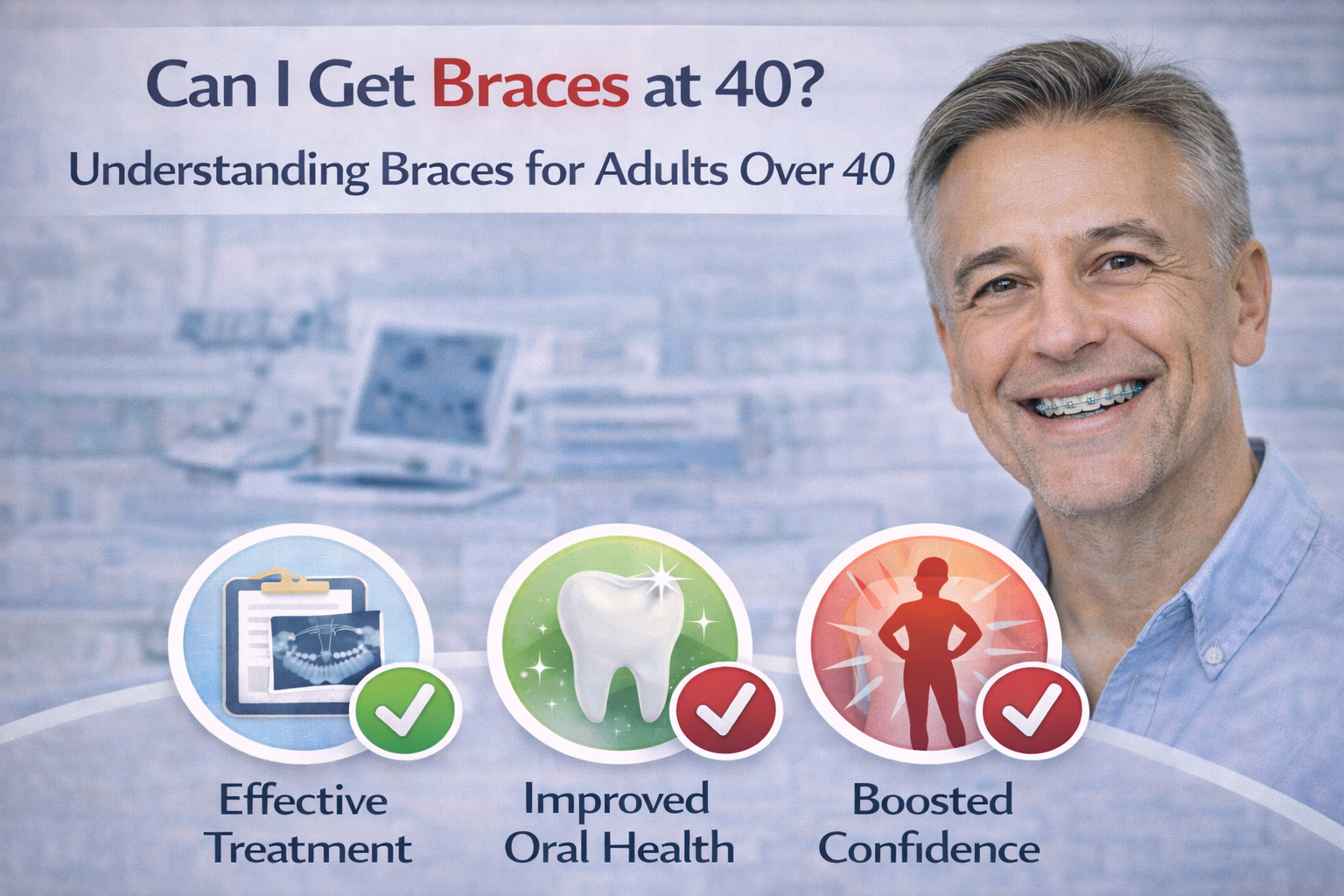
Can I Get Braces at 40? Understanding Braces for Adults Over 40
As we age, our dental health and appearance often take a backseat, but many adults are now seeking orthodontic treatments like braces for various reasons, including aesthetic improvement and oral health benefits. If you’re wondering, “I am 40 years old. Can I get braces?” the good news is that it’s never too late to enhance your smile.
With advancements in orthodontic technology, adults over 40 can benefit from braces just like younger patients. In this article, we’ll dive into why braces for adults over 40 are becoming more common, the types of braces available, the process of getting braces, and the benefits of orthodontic treatment.
Why Braces for Adults Over 40?
Braces for adults over 40 have become increasingly popular due to the numerous benefits they offer. Adults may have previously avoided braces due to concerns about appearance, discomfort, or inconvenience. However, modern orthodontics offers a range of treatments tailored to adult needs, making it possible for those over 40 to achieve a beautiful smile without the stigma that once accompanied braces.
Benefits of Getting Braces in Your 40s
- Improved Oral Health: Crooked teeth can lead to difficulty cleaning, which increases the risk of gum disease, tooth decay, and other oral health issues. Braces help to realign the teeth, making them easier to clean and maintain.
- Enhanced Appearance: One of the most obvious benefits of braces for adults over 40 is a more aesthetically pleasing smile. Straighter teeth can boost confidence and improve overall facial appearance.
- Prevention of Future Dental Issues: Misaligned teeth can contribute to problems such as jaw pain, uneven wear of teeth, and even headaches. Braces can address these issues before they become serious concerns.
- Better Bite and Functionality: If you have an overbite, underbite, or crossbite, braces can improve the functionality of your teeth, making it easier to chew and speak.
Types of Braces for Adults Over 40
When it comes to braces, adults over 40 have several options to choose from. The type of braces you choose will depend on your dental needs, lifestyle, and personal preferences.
1. Traditional Metal Braces
Traditional metal braces are the most common type of braces. They consist of metal brackets attached to the teeth and connected by a wire. Despite their visibility, modern metal braces are more comfortable and less noticeable than older models. They are an effective choice for patients who need significant realignment of their teeth.
2. Ceramic Braces
Ceramic braces function similarly to traditional metal braces but use tooth-colored or clear brackets to make them less noticeable. They’re a great option for adults who want to straighten their teeth without drawing too much attention to their orthodontic treatment.
3. Invisalign
Invisalign is a popular alternative for adults who prefer a more discreet treatment. Instead of using brackets and wires, Invisalign uses clear, removable aligners that gradually move the teeth into place. Invisalign is often chosen by adults who are concerned about the appearance of traditional braces and want the convenience of removable trays for eating and cleaning.
4. Lingual Braces
Lingual braces are similar to traditional metal braces but are placed on the back of the teeth, making them virtually invisible. These braces are custom-made to fit the contours of your teeth and are an excellent choice for adults looking for a more discreet treatment option.
The Process of Getting Braces for Adults Over 40
The process of getting braces for adults over 40 is similar to that for younger patients, but there are a few additional considerations to keep in mind.
1. Initial Consultation
Your orthodontist will evaluate your oral health and determine the best treatment plan for you. This may include X-rays, photographs, and impressions of your teeth. Based on this assessment, they will discuss the different options for braces that will work best for your dental needs.
2. Treatment Plan and Timeline
Once you’ve decided on the type of braces, your orthodontist will create a customized treatment plan. The length of time you’ll need to wear braces depends on the complexity of your case, but treatment typically lasts anywhere from 18 months to 3 years. Adults may require longer treatment times due to the decreased rate of bone growth in adults compared to younger patients.
3. Braces Installation
After the treatment plan is finalized, it’s time for the braces to be installed. During this process, your orthodontist will attach the brackets to your teeth and connect them with wires. You may experience some discomfort during the first few days, but this will subside as you get used to the braces.
4. Regular Checkups
Throughout the treatment, you will need to visit your orthodontist regularly for adjustments. These visits ensure that your braces are effectively moving your teeth into the desired position. Adjustments are typically needed every 4-6 weeks.
5. Post-Treatment Care
Once your braces are removed, you will likely need to wear a retainer to maintain the results. Retainers help ensure that your teeth stay in their new position. Regular follow-up appointments will help monitor the alignment of your teeth.
Common Concerns About Braces for Adults Over 40
It’s natural to have concerns about getting braces at 40. Here are some common questions and answers that may help alleviate your concerns.
Do braces hurt?
Braces themselves don’t cause pain, but adjustments may lead to some discomfort. Most patients experience mild soreness after each adjustment, which can be managed with over-the-counter pain relievers.
Will braces interfere with my lifestyle?
Modern braces, including clear aligners like Invisalign, are designed to be as comfortable and convenient as possible. Clear aligners can be removed for eating and cleaning, while metal or ceramic braces may require adjustments to your diet or oral care routine.
How long will it take to straighten my teeth?
The duration of your orthodontic treatment depends on the severity of your case. On average, braces take 18-24 months to straighten teeth, though some adults may require a bit longer.
Key Takeaways
- Braces for adults over 40 are more common and accessible than ever before.
- Modern orthodontic treatments, including traditional metal braces, ceramic braces, Invisalign, and lingual braces, make it possible for adults to straighten their teeth without sacrificing comfort or appearance.
- The process of getting braces for adults over 40 is similar to that of younger patients, with a customized treatment plan and regular checkups to monitor progress.
- Braces for adults over 40 can improve oral health, enhance appearance, and prevent future dental issues.
Remember, braces installation can be a life-changing decision for improving both your oral health and overall confidence. If you’re considering orthodontic treatment, consult with your orthodontist to discuss the best plan tailored for your needs.
FAQs
Can I get braces if I have missing teeth?
Yes! If you have missing teeth, your orthodontist may recommend implants or other solutions to fill the gaps and ensure that your braces can properly align your teeth.
Are braces for adults over 40 more expensive?
The cost of braces can vary based on the type of treatment you choose, your location, and the complexity of your case. Braces for adults may be slightly more expensive due to longer treatment times, but many orthodontists offer financing options.
Is it harder for adults to get braces?
Adults may take longer to see results than younger patients because their bones are no longer growing. However, with the right treatment plan, adults can achieve excellent results with braces.
Will I need to wear a retainer after my braces are removed?
Yes, most people will need to wear a retainer after their braces are removed to keep their teeth in their new position.
How often do I need to visit the orthodontist during treatment?
You will typically need to visit your orthodontist every 4-6 weeks for adjustments and progress checks. The frequency of visits may depend on the type of braces you choose.