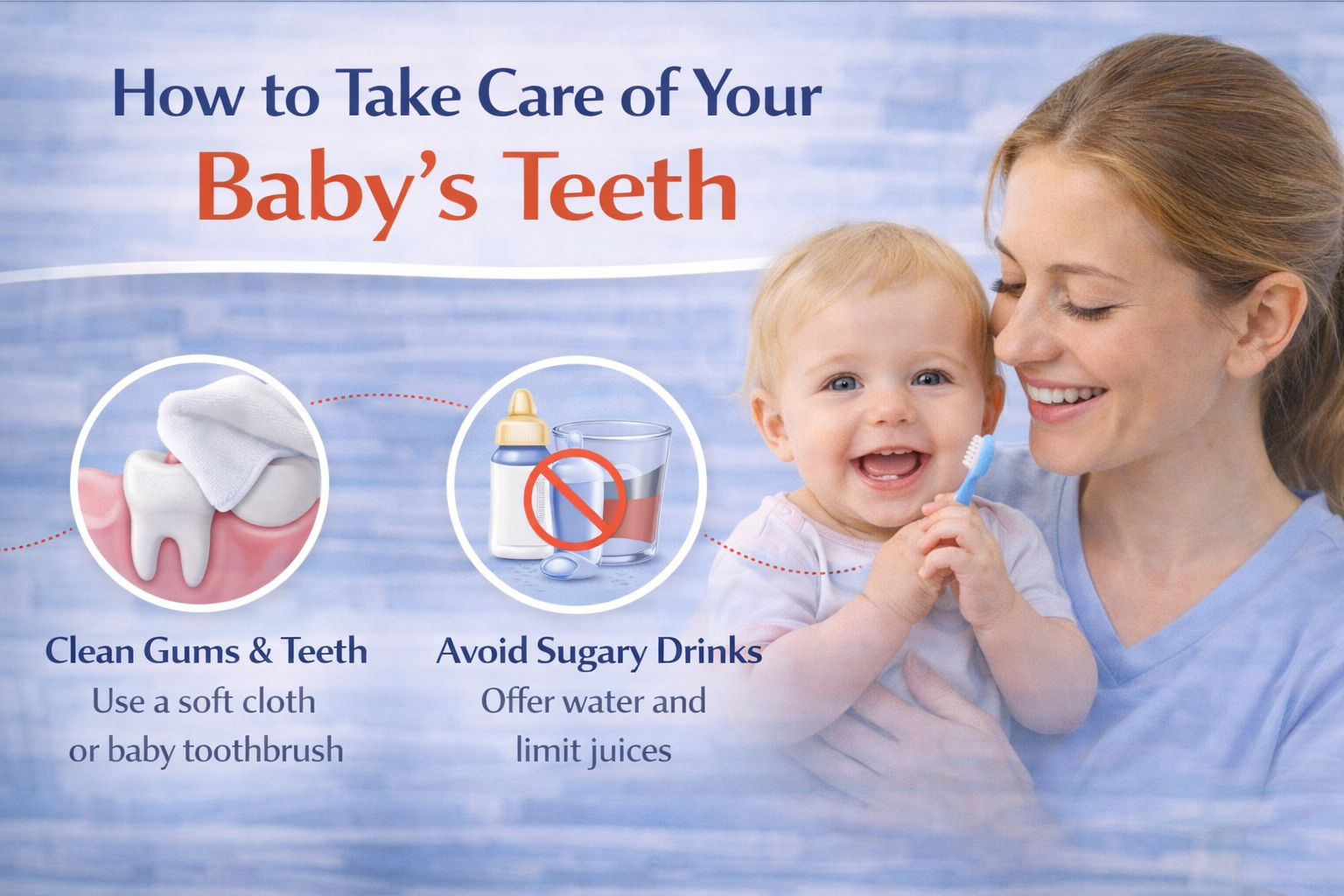
How to Take Care of Your Baby’s Teeth
Caring for your baby’s teeth is one of the most important steps you can take to ensure lifelong oral health. Many parents focus on general health and nutrition but overlook baby oral care, which begins even before your child’s first tooth emerges. Proper care not only prevents early dental problems but also instills habits that can last a lifetime.
In this guide, we’ll cover essential routines, dietary tips, and professional dental care advice for your child.
Why Baby Oral Care Matters
A common misconception is that baby teeth aren’t important because they will eventually fall out. In reality, these teeth are vital for:
- Proper chewing and nutrition
- Clear speech development
- Maintaining space for permanent teeth
- Preventing future dental issues like cavities or misalignment
According to the World Health Organization, 60-90% of children worldwide experience dental caries, highlighting the need for proactive oral care from an early age (WHO source).
Neglecting baby teeth can lead to pain, infections, and complications in permanent teeth development. That’s why early education on baby oral care is critical.
When to Start Baby Oral Care
Oral care should begin before the first tooth erupts. Here’s a simple timeline:
Age Range | Oral Care Tips | Notes |
Birth – 6 months | Clean gums with a soft, damp cloth | Helps remove bacteria and establish a routine |
6 – 12 months | Introduce a soft baby toothbrush with water | Brush gently twice a day |
12 – 24 months | Begin using a pea-sized amount of fluoride toothpaste | Ensure supervision to prevent swallowing |
2 – 3 years | Teach proper brushing techniques | Encourage independent brushing with parental guidance |
3 – 5 years | Flossing introduction | Floss once daily to remove food particles between teeth |
This table highlights the gradual introduction of oral care, making it easier for parents to follow a routine and ensure their child’s dental health.
Essential Baby Oral Care Routines
Brushing Techniques
- Use a soft-bristled toothbrush – A gentle brush prevents gum irritation.
- Brush twice a day – Morning and night are ideal times.
- Use fluoride toothpaste – Only a pea-sized amount is recommended for toddlers.
- Brush for two minutes – Ensure every tooth surface is cleaned.
- Replace toothbrush every 3 months – Worn-out bristles are ineffective.
Cleaning Gums and Tongue
Even before teeth appear, gently clean your baby’s gums after feedings with a soft, damp cloth. Once teeth appear, brush the gums and tongue to reduce bacteria and freshen breath.
Flossing
Flossing becomes important as teeth start touching each other. For toddlers, use child-friendly flossers or dental tape to make it easier.
Avoiding Harmful Habits
- Thumb sucking beyond age 3 may affect teeth alignment.
- Prolonged bottle feeding at night can cause “bottle mouth” decay.
- Sugary snacks and drinks increase cavity risk.
Diet and Nutrition for Strong Teeth
A balanced diet is essential for baby oral care. Foods rich in calcium, phosphorus, and vitamins help strengthen enamel.
- Best Foods for Healthy Teeth:
- Dairy: milk, cheese, yogurt
- Vegetables: carrots, broccoli, spinach
- Fruits: apples, pears, berries
- Protein: eggs, lean meats
- Foods to Limit:
- Sugary snacks and candies
- Sweetened beverages and juices
- Sticky foods like raisins that cling to teeth
Fun fact: Cheese can actually help reduce cavity-causing bacteria in the mouth due to its calcium and casein content (source).
Common Baby Dental Problems
Even with the best care, some issues may arise:
Problem | Signs | Prevention/Treatment |
Early Childhood Cavities | White or brown spots on teeth | Limit sugary foods, brush twice daily, fluoride toothpaste |
Teething Pain | Swollen gums, irritability | Teething rings, gentle gum massage |
Misaligned Teeth | Crowding or irregular bite | Monitor growth, consult a pediatric dentist |
Gum Infection | Red, swollen, or bleeding gums | Maintain oral hygiene, seek professional care |
Visiting a Pediatric Dentist
Regular dental visits are essential. The first visit is recommended by the age of one or within six months of the first tooth eruption. Pediatric dentists are trained to handle young children, making visits comfortable and educational.
For parents in the UAE, particularly in Ajman, seeking professional care ensures your child’s oral health is properly monitored. Learn more about Pediatric Dentistry in Ajman for expert guidance.
Teething Care Tips
Teething can be uncomfortable but manageable with the following methods:
- Use a clean teething ring or chilled pacifier.
- Gently massage gums with a clean finger.
- Avoid teething gels with high benzocaine content due to safety concerns.
- Maintain regular brushing even during teething to prevent plaque buildup.
Building Long-Term Habits
Encouraging your child to enjoy oral care can prevent future dental issues:
- Make brushing fun with songs or timers.
- Let children pick their toothbrush and toothpaste flavor.
- Read books about dental health to normalize routines.
- Reward consistent brushing habits with non-food rewards.
Key Takeaways
- Start early: Oral care should begin before teeth appear.
- Consistent brushing: Twice daily with fluoride toothpaste ensures healthy enamel.
- Diet matters: Nutrient-rich foods protect teeth; sugary foods increase risk.
- Professional guidance: Pediatric dentist visits by age one are crucial.
- Prevent bad habits: Thumb sucking, prolonged bottle use, and neglecting oral care can lead to long-term issues.
“The mouth is the gateway to the body. Healthy habits in children ensure a lifetime of good health.” – American Dental Association
FAQs
How can I start baby oral care before teeth appear?
Even before teeth emerge, clean your baby’s gums daily with a soft, damp cloth to remove bacteria and establish a hygiene routine.
When should my baby see a dentist for the first time?
The American Academy of Pediatric Dentistry recommends the first dental visit by age one or within six months of the first tooth eruption to monitor growth and prevent early dental issues.
What foods are best for healthy baby teeth?
Include calcium-rich foods like milk and cheese, vegetables like spinach and carrots, and fruits such as apples and berries. Limit sugary snacks and sticky foods.
How do I handle teething discomfort?
Use chilled teething rings, gently massage gums, and maintain regular brushing. Avoid teething gels with high benzocaine content.
How can I make brushing fun for my child?
Use timers, sing songs, let children choose their toothbrush and toothpaste flavor, and reward consistent brushing habits with non-food rewards.