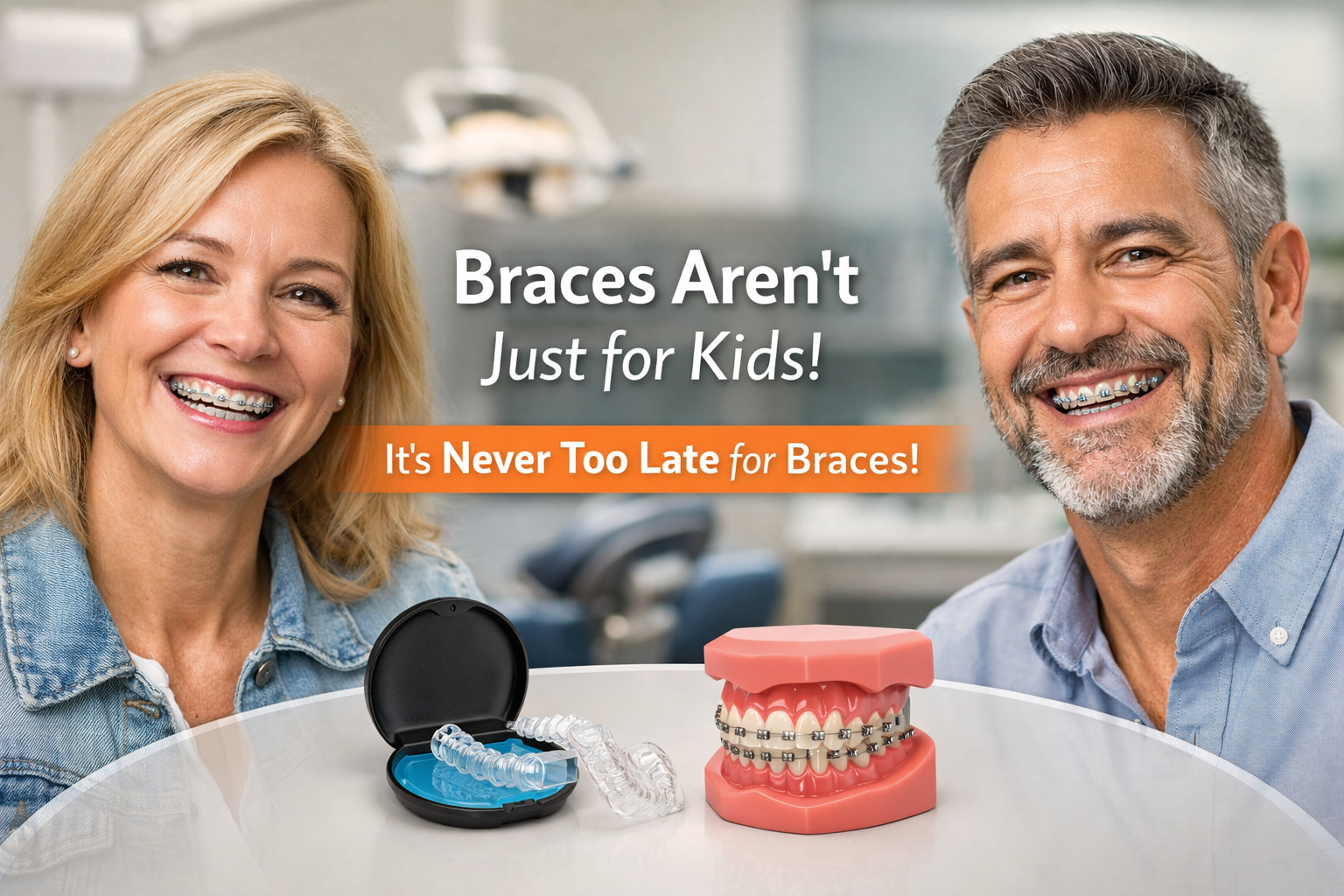
Braces Are No Longer Only for Children – It’s Never Too Late for Braces!
Gone are the days when braces were considered exclusively for children and teenagers. Today, adults all over the world are opting for braces to achieve straighter, healthier smiles. The benefits of braces aren’t just cosmetic; they can significantly improve your dental health and overall confidence. In this blog, we’ll explore why adult braces treatment is a fantastic option at any age, how the process works, and why it’s never too late to start.
Why Are More Adults Getting Braces?
There has been a significant rise in the number of adults seeking orthodontic treatment in recent years, and it’s easy to see why. There are several reasons why adults are choosing to get braces, including:
1. Improved Oral Health
Braces aren’t just for aesthetics—they are also beneficial for your overall oral health. Misaligned teeth can lead to various dental problems such as gum disease, tooth decay, and difficulty chewing. By correcting misalignment, adult braces treatment can help prevent these issues.
2. Boosted Self-Confidence
A beautiful smile can work wonders for your confidence. If you’ve been self-conscious about your smile for years, braces can help you achieve the smile you’ve always wanted. It’s never too late to start feeling great about your appearance.
3. Functional Benefits
Braces also help in improving the functionality of your teeth. This includes better bite alignment, less jaw pain, and improved ability to chew and speak properly.
The Benefits of Adult Braces Treatment
Getting braces as an adult can offer a multitude of benefits. Here are some of the top advantages:
1. Less Visible Options
Thanks to advancements in orthodontics, adults can now choose from more discreet options like ceramic braces or Invisalign, which are nearly invisible. This means that you can straighten your teeth without drawing attention to the fact that you’re wearing braces.
2. Faster Results
Adults often experience faster results with braces compared to children. Since adult teeth are fully developed, it may be easier and quicker to adjust them into their desired position.
3. Long-Term Health Improvements
By correcting issues such as overbites, underbites, and crooked teeth, adult braces treatment can lead to better long-term dental health. Straight teeth are easier to clean, reducing the risk of cavities and gum disease.
The Process of Getting Braces as an Adult
Step 1: Initial Consultation
The first step in adult braces treatment is scheduling a consultation with an orthodontist. During this visit, the orthodontist will examine your teeth, take X-rays, and discuss your goals. They will also help you understand which type of braces would be best for you, whether traditional metal braces, ceramic braces, or clear aligners.
Step 2: Braces Installation
Once you’ve selected your treatment plan, the next step is the installation of your braces. For traditional metal braces, this will involve placing small brackets on your teeth and connecting them with wires. For clear aligners like Invisalign, you will receive a set of custom-made clear trays that gradually shift your teeth into place. You can learn more about the process of braces installation here.
Step 3: Regular Adjustments
Throughout your treatment, you will need to visit your orthodontist for regular check-ups. This is when the orthodontist will make adjustments to your braces to ensure they are gradually moving your teeth into the desired position. These visits will typically happen every 4 to 6 weeks.
Step 4: Aftercare
Once your braces are removed, your orthodontist will provide you with retainers to help maintain the new position of your teeth. This aftercare is crucial to ensure that your teeth don’t shift back to their original alignment.
Braces Treatment Options
|
Braces Type
|
Pros
|
Cons
|
Treatment Time
|
|
Metal Braces
|
Most affordable, highly effective
|
Noticeable, may cause discomfort
|
18–24 months
|
|
Ceramic Braces
|
Less noticeable, effective
|
More expensive, can stain easily
|
18–24 months
|
|
Invisalign (Clear Aligners)
|
Discreet, removable, comfortable
|
Expensive, requires discipline
|
12–18 months
|
|
Lingual Braces
|
Hidden behind teeth, effective
|
Expensive, uncomfortable at first
|
18–24 months
|
Is Adult Braces Treatment Right for You?
If you’ve been considering adult braces treatment, it’s important to assess whether it fits your lifestyle and dental needs. Consulting with an orthodontist is the best way to determine the right path for your treatment. Many adults find that braces not only improve their smile but also significantly enhance their quality of life.
Key Takeaways
- Adult braces treatment is more popular than ever and offers numerous benefits, including improved oral health, better confidence, and enhanced functionality.
- You have several options for braces, including traditional metal braces, ceramic braces, Invisalign, and lingual braces, each offering unique advantages.
- Braces installation is a straightforward process that begins with a consultation, followed by regular adjustments, and ends with aftercare using retainers.
- It’s never too late to achieve the smile you’ve always wanted, no matter your age!
FAQs
What age is too late for braces?
There is no age limit for braces. Many adults undergo orthodontic treatment in their 30s, 40s, and even 50s. As long as your gums and teeth are healthy, it’s never too late to start your journey to a perfect smile.
Can braces fix an overbite in adults?
Yes, adult braces treatment is very effective in fixing overbites. Your orthodontist will create a personalized treatment plan to correct your bite and improve your oral health.
How long does it take to see results with braces?
The time it takes to see results varies, but most adults begin to notice changes within a few months. The total treatment time typically lasts between 12 and 24 months, depending on the complexity of your case.
Are there less visible braces for adults?
Yes! There are several discreet options for adults, including ceramic braces, Invisalign, and lingual braces, which are placed behind your teeth and are virtually invisible.
How do I take care of my braces during treatment?
It’s important to maintain good oral hygiene, including brushing after every meal and flossing regularly. Additionally, avoid sticky or hard foods that could damage your braces.