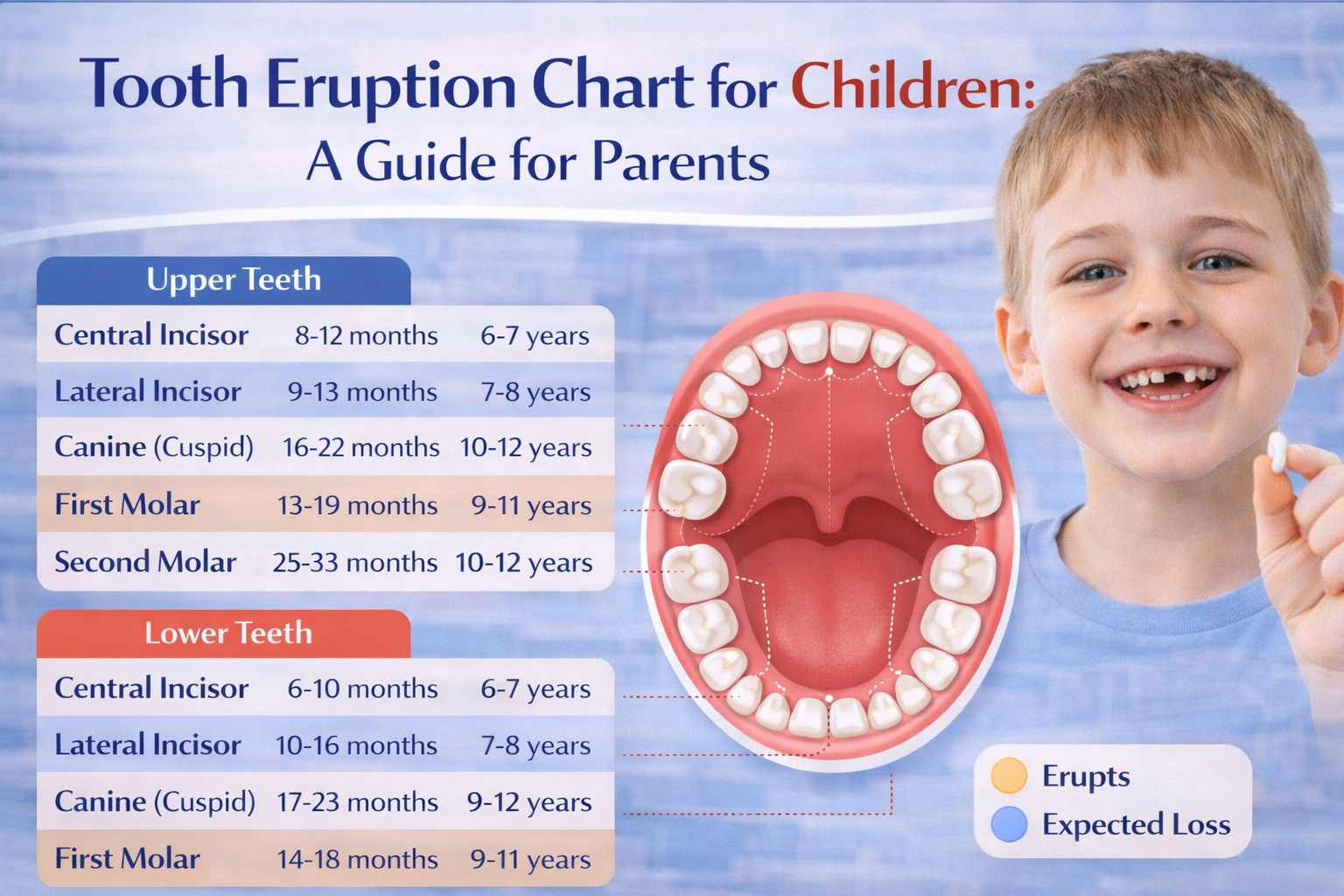
Tooth Eruption Chart for Children: A Guide for Parents
Watching your child grow is a remarkable journey, and one of the most exciting milestones is seeing their first teeth appear. Understanding the timing and sequence of tooth eruption can help parents monitor their child’s dental health and recognize any issues early. This baby teeth chart will guide you through the stages of tooth development, tips for care, and when to consult a professional.
Understanding Baby Teeth and Their Importance
Baby teeth, also known as primary teeth, play a crucial role beyond just creating a cute smile. They help children:
- Chew food properly, aiding in digestion
- Speak clearly by supporting tongue and speech development
- Maintain space in the jaw for permanent teeth
- Prevent misalignment issues later in life
The typical child has 20 primary teeth: 10 in the upper jaw and 10 in the lower jaw. These teeth usually start appearing around 6 months of age and are gradually replaced by permanent teeth between ages 6 and 12.
“The health of primary teeth is essential for the lifelong dental health of a child.” – American Academy of Pediatric Dentistry
Baby Teeth Chart: Eruption Timeline
Every child is unique, and the timing of tooth eruption can vary. However, most follow a predictable pattern. Below is a baby teeth chart showing the average age for each tooth’s appearance:
Tooth Type | Upper Jaw (Months) | Lower Jaw (Months) |
Central Incisors | 8 – 12 | 6 – 10 |
Lateral Incisors | 9 – 13 | 10 – 16 |
Canines (Cuspids) | 16 – 22 | 17 – 23 |
First Molars | 13 – 19 | 14 – 18 |
Second Molars | 25 – 33 | 23 – 31 |
Note: If teeth appear earlier or later than the average range, it is usually normal. However, persistent delays or abnormalities may require consultation with a pediatric dentist.
Stages of Tooth Eruption
1. The First Tooth (6–12 Months)
Most children get their first tooth between 6 and 12 months. Teething symptoms may include:
- Drooling
- Mild irritability
- Swollen gums
- Chewing on objects
Parents can soothe discomfort using a chilled teething ring or gentle gum massage.
2. The Front Teeth (Central and Lateral Incisors)
The central incisors, typically the first to appear, are followed by lateral incisors. These teeth are essential for biting soft foods and helping children form sounds correctly.
3. The Canines (Cuspids)
Canines erupt after the incisors and play a significant role in tearing food. They also help maintain proper spacing for permanent teeth.
4. The Molars
First molars appear around 13–19 months, while second molars emerge between 23–33 months. Molars are critical for chewing efficiency and jaw development.
Common Teething Concerns
While most children experience teething without major issues, some parents notice:
- Fever or diarrhea (usually mild; consult a doctor if severe)
- Gum rashes or irritation
- Difficulty sleeping
It’s important to avoid over-the-counter teething medications unless prescribed by a pediatric dentist. Safe alternatives include teething toys and gentle gum massages.
Oral Care Tips for Baby Teeth
Maintaining baby teeth is crucial for overall dental health. Here are practical tips:
- Start Cleaning Early: Wipe gums with a soft cloth even before the first tooth erupts.
- Use Fluoride Toothpaste: Once teeth appear, brush twice daily with a tiny smear of fluoride toothpaste.
- Regular Dental Visits: Schedule your child’s first visit by age 1. Pediatric Dentistry in Ajman provides expert guidance for dental health from infancy.
- Limit Sugary Foods: Minimize sweets and juice to prevent early cavities.
- Monitor Tooth Alignment: Early intervention can prevent future orthodontic issues.
According to the World Health Organization, over 60% of children worldwide experience tooth decay by age 5 (WHO Report).
When to Be Concerned About Delayed or Early Tooth Eruption
Some children may experience delayed or unusually early tooth eruption. While variations are often normal, you should consult a dentist if:
- No teeth appear by 18 months
- Gums are persistently swollen or discolored
- Teeth appear in clusters unusually early
- Other developmental delays are present
Early evaluation can identify underlying conditions such as nutritional deficiencies, genetic disorders, or hormonal imbalances.
Fun Facts About Baby Teeth
- Children are born with 20 primary teeth hidden in the gums.
- Some babies are born with natal teeth—teeth present at birth.
- Baby teeth help develop the jawbone for permanent teeth.
- Children’s teeth are as strong as adult teeth in enamel composition.
These facts remind us how remarkable and critical these tiny teeth are in a child’s development.
Key Takeaways
- Use the baby teeth chart to track your child’s tooth eruption timeline.
- Healthy baby teeth set the foundation for permanent teeth.
- Regular dental care, early cleaning, and professional checkups are essential.
- Watch for abnormal eruption patterns and consult a pediatric dentist if needed.
- Balanced nutrition and proper hygiene prevent early cavities.
FAQs
1. At what age do children usually get their first tooth?
Most babies get their first tooth between 6–12 months, usually the lower central incisors. However, some children may start teething earlier or later, which is usually normal.
2. How can I soothe my baby’s teething discomfort?
Safe methods include chilled teething rings, gentle gum massages, or soft foods for older babies. Avoid teething medications unless prescribed by a pediatric dentist.
3. When should I take my child to a dentist?
The American Academy of Pediatric Dentistry recommends a first dental visit by age 1. Regular checkups ensure proper development and early cavity detection.
4. What should I do if my child’s teeth are erupting late?
Delayed eruption may be normal, but consult a dentist if no teeth appear by 18 months, or if other health concerns are present.
5. How important are baby teeth for long-term dental health?
Baby teeth maintain jaw structure, help with chewing and speech, and guide permanent teeth. Poor care can lead to cavities, misalignment, and other dental issues.