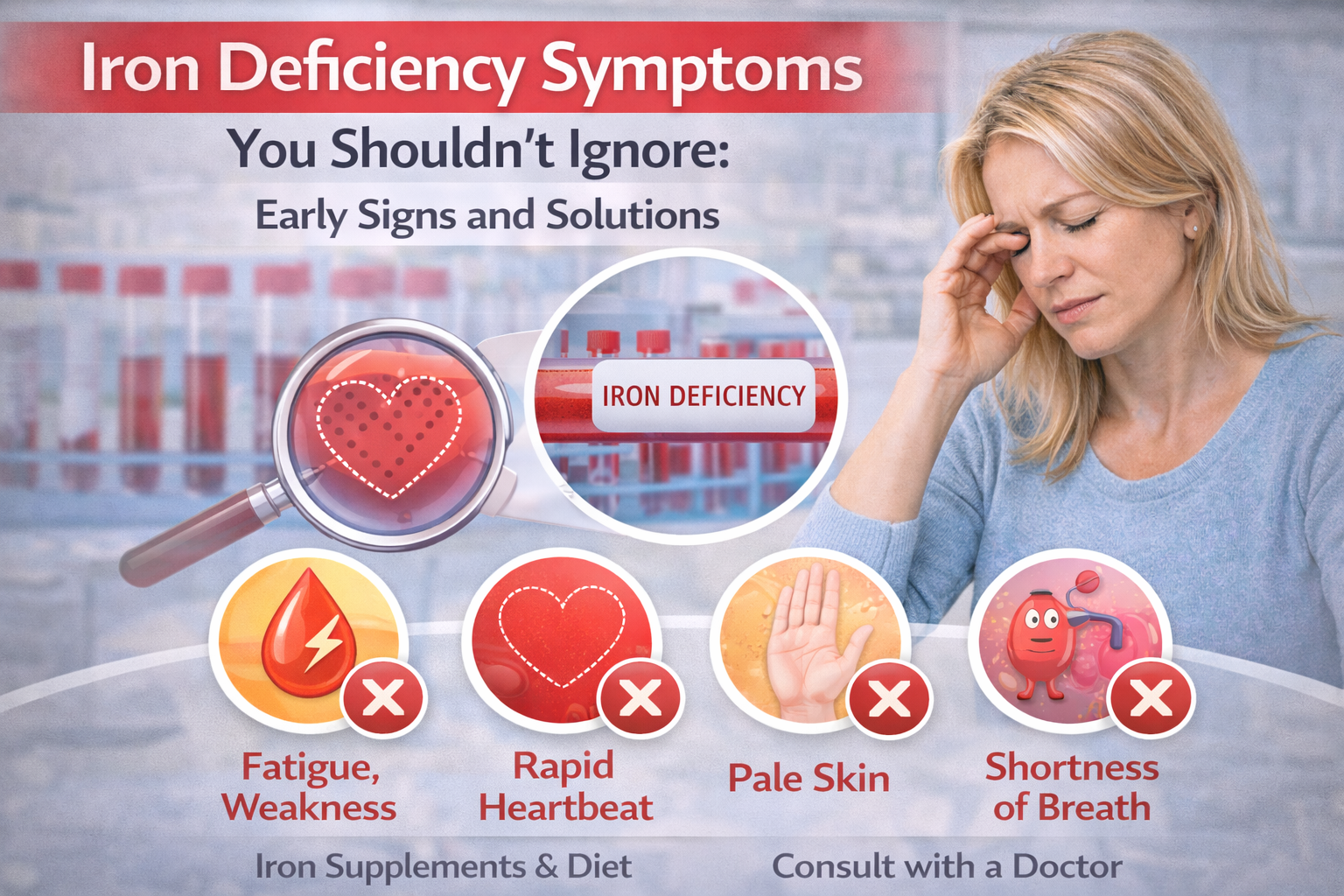
Iron Deficiency Symptoms You Shouldn’t Ignore: Early Signs and Solutions
Iron is an essential mineral that plays a critical role in producing hemoglobin—the protein in red blood cells that carries oxygen throughout the body. When your body lacks sufficient iron, it cannot make enough healthy red blood cells, leading to iron symptoms deficiency, a condition also known as iron deficiency anemia.
Ignoring the early signs can lead to serious health complications, including extreme fatigue, heart problems, and impaired cognitive function. In this blog, we’ll break down the subtle and not-so-subtle symptoms of iron deficiency, who’s most at risk, and what you can do to detect and manage it.
Understanding Iron Deficiency and Its Impact
Iron deficiency doesn’t develop overnight. It progresses through stages—starting from depleted iron stores to eventual anemia. The symptoms can vary depending on the severity and underlying cause, but the effects on your quality of life can be significant.
Early Iron Symptoms Deficiency: What to Look Out For
Early symptoms can be easily overlooked or mistaken for general tiredness or stress. Here are some red flags to take seriously:
1. Fatigue and Weakness
Lack of oxygen delivery to your muscles and tissues makes you feel tired even after adequate rest. This is one of the most common signs of iron deficiency.
2. Pale or Yellowish Skin
Iron deficiency can affect the color of your skin or inside your eyelids due to reduced hemoglobin levels. People with medium to dark complexions may notice a dull or grayish appearance.
3. Shortness of Breath
If you feel winded even with mild exertion, it could be due to insufficient oxygen supply in the body.
4. Headaches and Dizziness
Inadequate oxygen to the brain may result in frequent headaches, light-headedness, or even fainting episodes.
5. Cold Hands and Feet
Iron helps regulate body temperature. A deficiency can lead to poor circulation, making your hands and feet feel cold.
Additional Signs of Iron Symptoms Deficiency
Symptom | Why It Happens |
Brittle nails | Lack of oxygen affects nail health |
Restless leg syndrome | Linked to low iron levels in the brain |
Chest pain or rapid heartbeat | Heart works harder to compensate for oxygen shortage |
Craving for ice or non-food items (Pica) | Often linked with iron deficiency anemia |
Poor concentration | Brain function is impaired due to low oxygen |
Who Is at Risk of Iron Deficiency?
Some groups are more susceptible to developing iron deficiency:
- Women of childbearing age due to menstruation
- Pregnant women (need increased iron)
- Infants and young children
- Vegetarians or vegans
- Frequent blood donors
- People with gastrointestinal disorders like celiac or Crohn’s disease
“Iron deficiency is the most common nutritional disorder in the world.” – World Health Organization (WHO)
Source
Causes of Iron Deficiency
Iron deficiency may occur due to:
- Inadequate dietary intake
- Blood loss (heavy periods, internal bleeding)
- Malabsorption
- Increased demand (during pregnancy or adolescence)
If you suspect any of these causes, consult your physician or schedule an Iron deficiency test Ajman to get a clear diagnosis and timely treatment.
How to Confirm Iron Deficiency
A simple blood test can help identify iron symptoms deficiency. These tests typically include:
- Complete Blood Count (CBC)
- Serum Ferritin
- Serum Iron and Total Iron Binding Capacity (TIBC)
Your doctor will interpret these values to confirm if you have iron deficiency anemia or other related conditions.
Treating Iron Deficiency: What Are Your Options?
Once diagnosed, your treatment plan will depend on the severity of the deficiency and the underlying cause.
1. Dietary Changes
Boost your iron intake with these iron-rich foods:
- Red meat, chicken, turkey
- Spinach, kale, broccoli
- Legumes (lentils, chickpeas)
- Fortified cereals
- Pumpkin seeds and nuts
Include Vitamin C-rich foods (like oranges, strawberries) to improve iron absorption.
2. Iron Supplements
Your doctor may prescribe oral iron supplements. Always take them under medical supervision to avoid complications like constipation or iron overload.
3. Addressing Underlying Causes
If heavy periods or gastrointestinal issues are the cause, your physician will create a targeted treatment plan.
Key Takeaways
- Early detection of iron symptoms deficiency can prevent serious complications.
- Symptoms range from tiredness and pale skin to chest pain and poor memory.
- At-risk individuals should regularly test their iron levels.
- Proper diet and supplements, guided by a healthcare professional, are effective in managing iron deficiency.
- Testing is crucial—schedule a test if you notice persistent fatigue or other symptoms.
FAQs
1. What are the most common signs of iron symptoms deficiency?
Common signs include fatigue, pale skin, dizziness, and cold extremities. Some people also experience cravings for non-food items like ice.
2. How is iron deficiency diagnosed?
It’s diagnosed through a blood test that checks hemoglobin, ferritin, and serum iron levels. Consult your doctor or visit a nearby clinic for testing.
3. Can iron deficiency be reversed with diet alone?
Mild cases can be managed with iron-rich foods, but moderate to severe deficiencies often require supplements.
4. How long does it take to recover from iron deficiency?
It depends on the severity. With supplements, noticeable improvements may begin in 2–3 weeks, but full recovery may take months.
5. Where can I get tested for iron deficiency in Ajman?
You can visit Amtek Medical to book your Iron deficiency test Ajman and receive same-day results.
If you’ve been feeling more tired than usual or experiencing other unusual symptoms, don’t ignore them. Your body may be trying to tell you something important—act early and consult a healthcare provider.